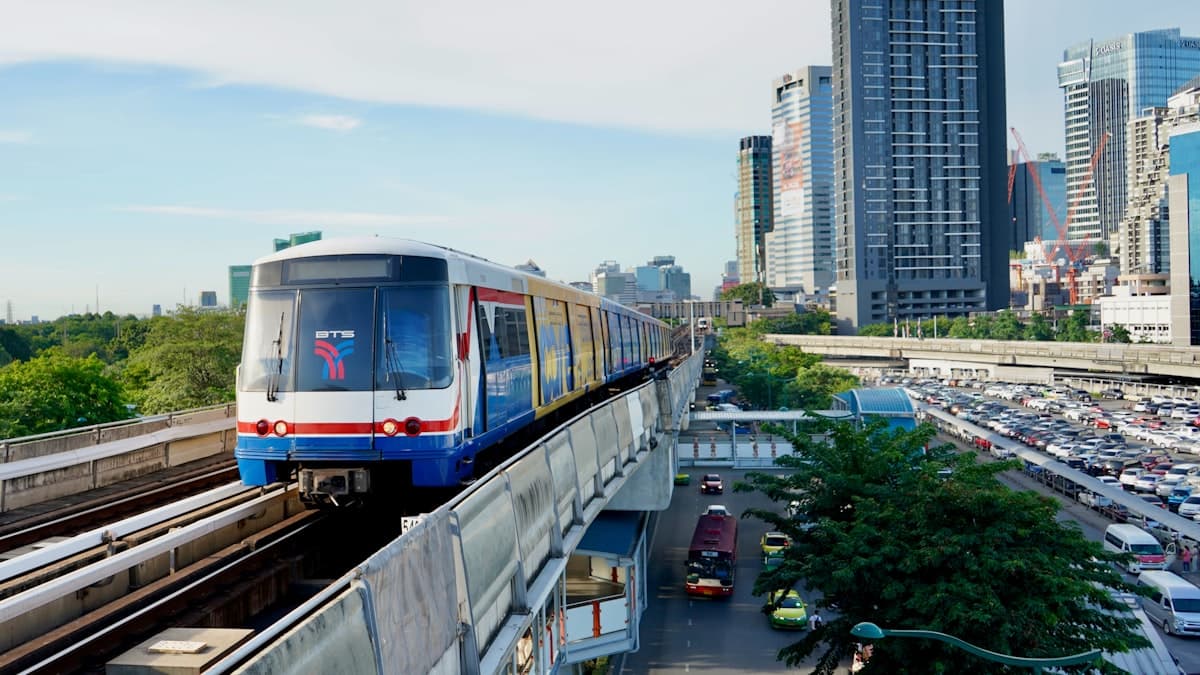
Bangkok has one of the most ambitious urban rail networks in Southeast Asia — and it keeps growing. Whether you are a daily commuter, a first-time visitor, or a property buyer evaluating neighbourhoods, understanding how the BTS Skytrain and MRT work is essential. This guide covers every line, key stations, interchange points, and — critically — how transit proximity drives property values across the city.
Overview: Bangkok's Mass Transit Network
Bangkok's rail transit system consists of five main networks:
- BTS Skytrain — elevated above-ground rail, the most popular for expats and CBD workers
- MRT Blue Line — underground subway linking the CBD, Chinatown, and Bang Sue Grand Station
- MRT Purple Line — connects Nonthaburi province to Bang Sue in the north
- Airport Rail Link (ARL) — express and city trains between Phaya Thai and Suvarnabhumi Airport
- MRT Yellow and Pink Lines — newer elevated lines expanding eastward and northward
Together these lines cover over 200 kilometres of track, with dozens of interchange stations that allow seamless transfers. The network is still expanding — new extensions and lines are added regularly.
BTS Skytrain: The Green Backbone
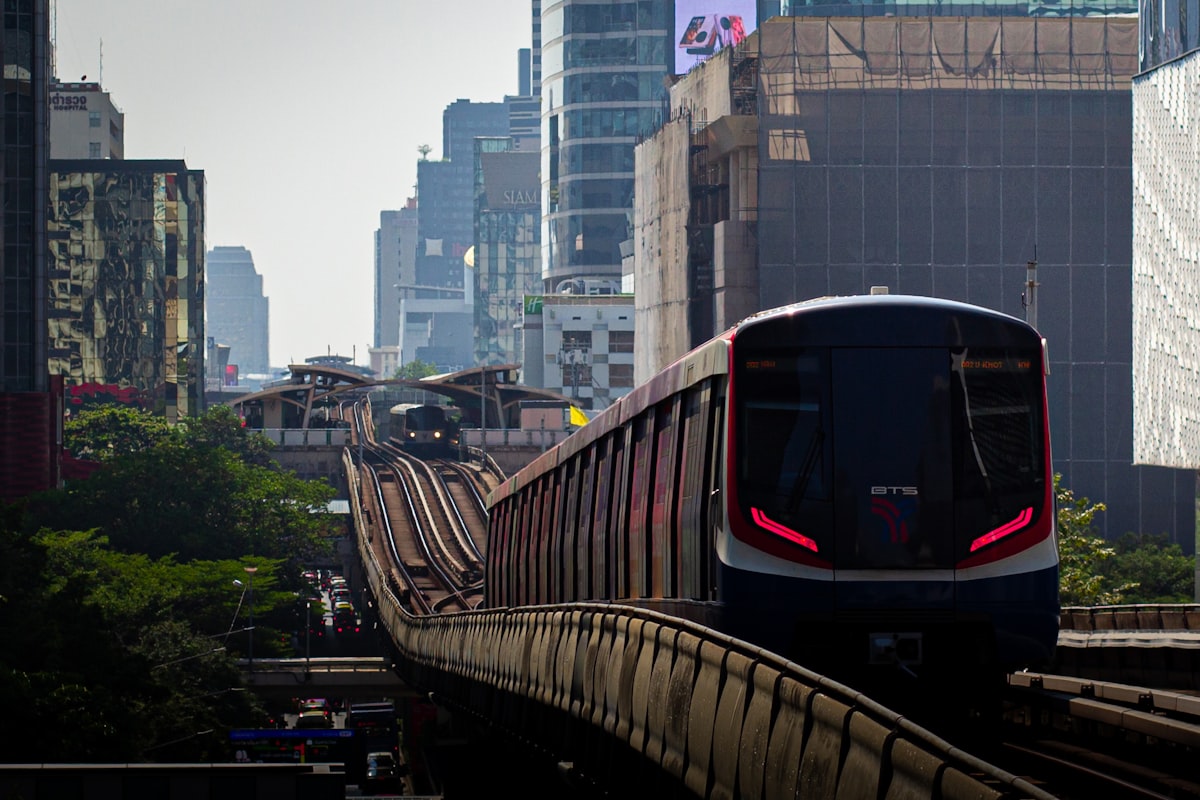
The BTS operates four lines spanning approximately 70 kilometres with 59 stations. Service runs from 05:30 to 24:00 daily, with trains every 3–5 minutes during peak hours. Fares range from ฿17 to ฿59 per trip. The Rabbit card handles top-ups and monthly passes.
Sukhumvit Line (Light Green)
The longest BTS line runs east–west through Bangkok's primary expat and commercial corridor. Key stations: Mo Chit (Chatuchak Weekend Market), Siam (central interchange), Asok (MRT Blue interchange, major business district), Phrom Phong (Emporium, Japanese community), Thong Lo and Ekkamai (lifestyle, nightlife), and On Nut (value residential zone).
Silom Line (Dark Green)
Connects Siam to the riverside at Saphan Taksin, then to Bang Wa on the Thonburi side. Critical stations: Sala Daeng (MRT Silom interchange, financial district), Chong Nonsi (Sathorn, embassies), and Saphan Taksin (riverside condos, ferry pier).
Gold Line
A short three-station automated line from Saphan Taksin via Charoen Nakhon to Khlong San — serving ICONSIAM and the growing Thonburi residential market. Property along this line has appreciated significantly since its 2020 opening.
MRT Blue and Purple Lines
The MRT Blue Line is Bangkok's underground subway, looping through the city centre from Tao Poon via Bang Sue Grand Station (Thailand's largest rail hub), Sukhumvit (interchange with BTS Asok), Si Lom (interchange with BTS Sala Daeng), Hua Lamphong, Wat Mangkon (Chinatown), and back to complete the circle.
The MRT Purple Line serves Nonthaburi residents, running from Tao Poon to Khlong Bang Pai — the primary commuter artery for Bangkok's western and northern suburbs, spurring significant condo development along its corridor.
Airport Rail Link
The Airport Rail Link (ARL) connects Phaya Thai BTS station to Suvarnabhumi Airport in approximately 26 minutes. Key stop: Makkasan — a major interchange point with significant future development potential. The ARL operates an Express (non-stop, ฿100) and City Line (stopping, ฿15–฿45).
How Transit Proximity Affects Property Values
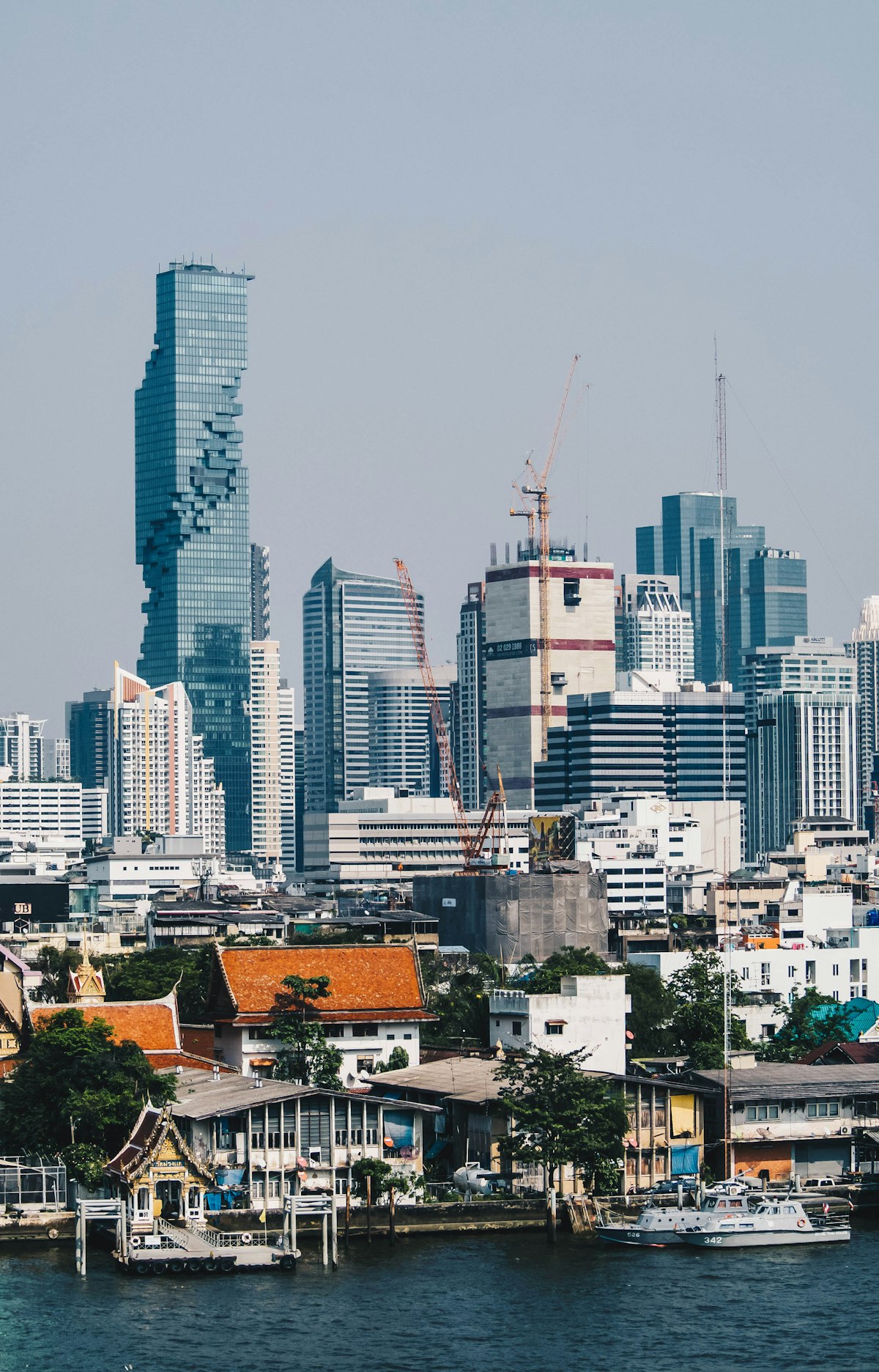
Condos within 200 metres of a BTS or MRT station command an average of ฿200,000–฿280,000 per sqm in prime areas — dropping 30–50% beyond 1km. Top transit-linked property zones:
- Asok / Sukhumvit (BTS+MRT interchange) — most liquid for foreign buyers; ฿220,000–฿280,000/sqm
- Phrom Phong — Emporium district, Japanese expat community; ฿200,000–฿260,000/sqm
- Thong Lo and Ekkamai — trendy lifestyle corridor; ฿180,000–฿240,000/sqm
- Silom / Sala Daeng — CBD, consistent business demand; ฿160,000–฿210,000/sqm
- On Nut / Udom Suk — value zone with BTS access; ฿90,000–฿140,000/sqm
Practical Tips for Buyers and Renters
- ✅ Always verify the actual walking time to the station — "BTS access" in listings can mean 5 or 20 minutes
- ✅ Check planned extensions: stations opening in 3–5 years can drive pre-launch appreciation
- ✅ MRT Blue interchange stations tend to have higher rental demand than BTS-only stations
- ✅ The Gold Line (ICONSIAM area) has seen strong appreciation — Thonburi riverside is an emerging zone
- ✅ On Nut and beyond offer BTS access at significantly lower prices — ideal for yield-focused investors
What's Coming Next
The MRT Yellow Line (Lat Phrao–Samrong) and Pink Line (Nonthaburi–Min Buri) are now operational. The Orange Line is under construction. Future Dark Red and Light Red commuter rail lines radiating from Bang Sue Grand Station will dramatically expand the commuter belt. Neighbourhoods currently considered "off the map" will become viable — buying near a planned station before construction completes has historically been one of Bangkok's most reliable investment strategies.